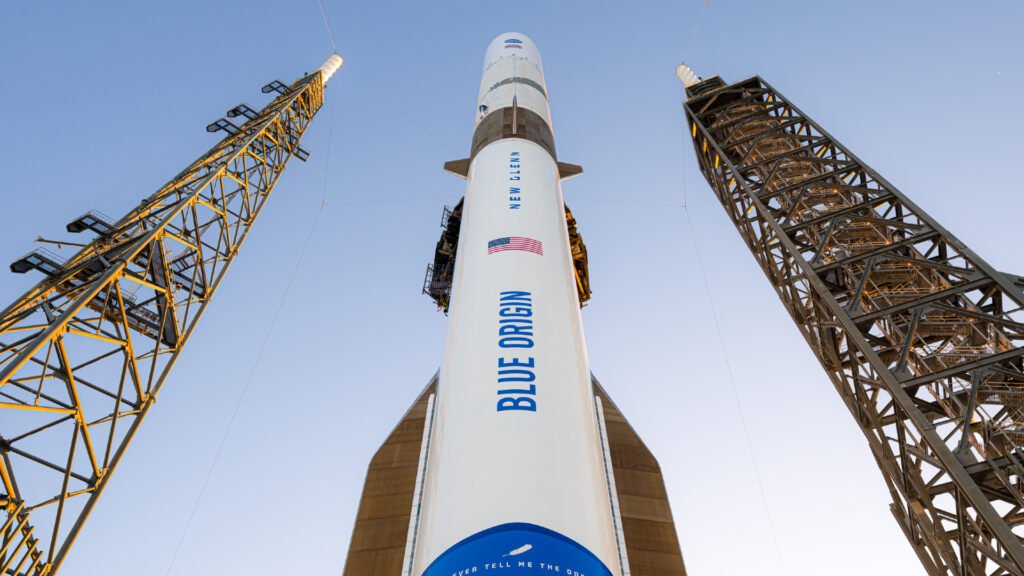

Launch That Speaks to a New Era in Space Access
What happened this week is more than just a “successful mission.” Blue Origin’s achievement reflects a shift in how the Republic views access to space, ownership of launch capacity, and the meaning of reusability—not just for satellites, but for power, industry, and national ambition.
By sending the twin ESCAPADE Probes toward Mars and landing the booster on the barge Jacklyn, Blue Origin crossed from the theoretical to the operational. The company is now only the second in U.S. history to recover an orbital rocket’s first stage during a mission. Space+1
Landing a rocket isn’t just a technical feat; it is a statement. The underlying promise—that access to orbit can become routine, reuseable, and therefore far more affordable—is now closer to reality. The Republic’s promise of expansion and service is no longer contained to Earth’s atmosphere.
Implications for Equity, Competition & National Purpose
Democratization or Divide?
At its best, reusable rockets mean more players can reach space—not just governments or big contractors. That could accelerate research, empower smaller states or institutions, and open doors historically closed. But there’s a flip side: if reuse remains tightly held by elite players, the outcome could be a wider divide, not a narrower one.
Power in Orbit, Power on Earth
Blue Origin’s success challenges the dominance of its rival, SpaceX, and suggests a more diversified commercial space sector ahead. But questions remain: who sets the rules, who pays the cost, and how will this competition shape the Republic’s long-term mission in space?
Scientific Purpose Meets Commercial Ambition
The mission to Mars isn’t just symbolic. ESCAPADE will study Mars’s magnetic field and atmosphere—data that expands human knowledge and underscores the Republic’s ambition to explore. NASA Yet this scientific goal rides on a commercial vehicle, one backed by private wealth, raising the question: in the age of privatized space travel, whose priorities steer our future?
A Test of Continuity and Norms
Space has often been treated as the next frontier of American democracy—open to innovation, investment, and inspiration. But the pathway to space depends on continuity: stable funding, regulatory oversight, durable infrastructure. When a private firm becomes a primary executor of what was once national capability, the Republic must ask: are we building resilient systems, or merely substituting private ambition for public purpose?
Blue Origin’s milestone is significant—but it also prompts a question of scale. Reuse lowers cost, yes—but will that translate into broader access, or just more powerful payloads? Will the next generation of scientists, engineers, and even ordinary citizens benefit, or will opportunities consolidate further into the hands of a few?
Final Thought
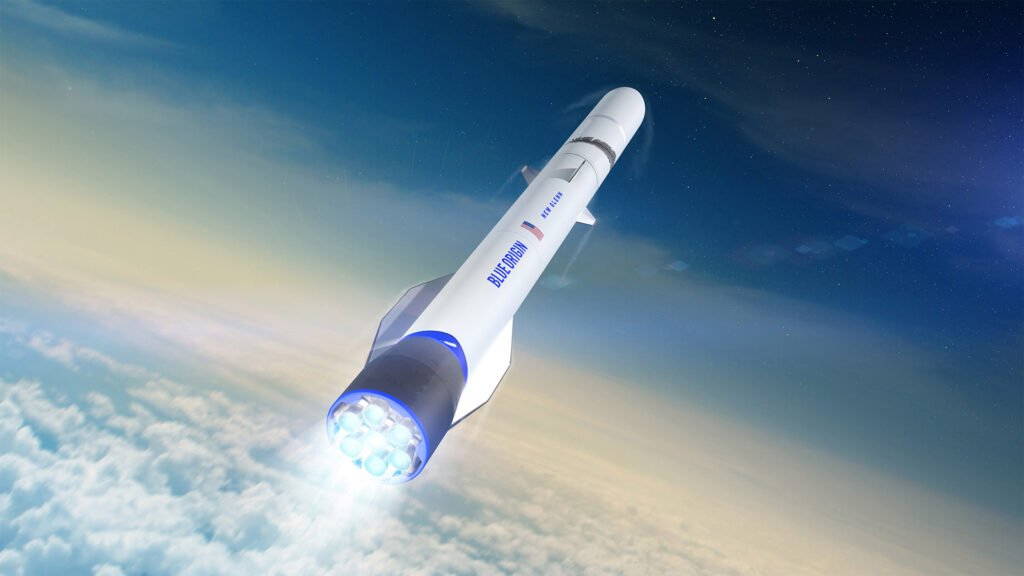
The launch of New Glenn is no mere spectacle—it is a statement: the era of “one-use” rockets is fading, and the frontier of space access is shifting. For the Republic to fully benefit, this moment must turn into a movement—toward wider access, deeper investment in science, and safeguards that ensure commercial power serves public purpose. If the leap to Mars leaves half of Earth behind, then our mastery of rockets becomes hollow.